





FOOD SAFETY PANEL OPTIONS




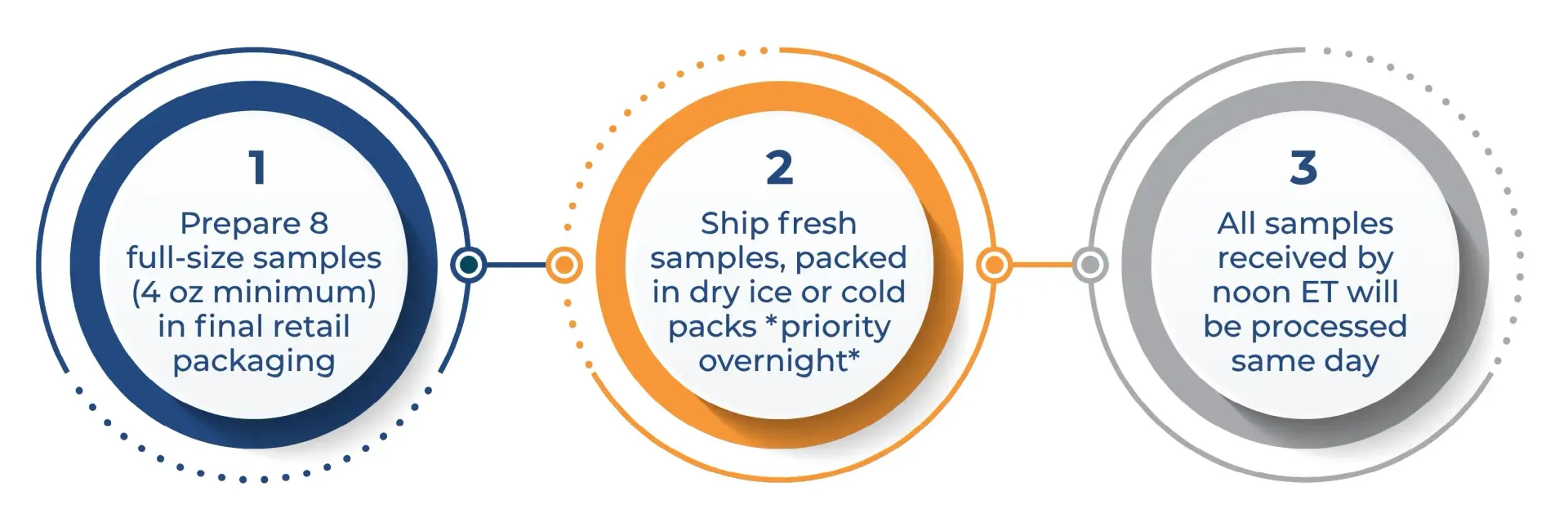
PROCESS FOR SENDING SAMPLES
FOOD SAFETY TESTING
The primary purpose of food safety testing is to detect whether foodborne pathogens and hygiene indicators like yeast and mold are present in a product. Pathogens like salmonella, Listeria, and E coli can be introduced through raw materials, the environment the food is processed in, or through improper handling, while mycotoxins can develop in grains and crops stored in poor conditions. The most common testing methods are culture-based and molecular. In a culture-based test, the food is stored under specific conditions that are conducive to pathogen growth, which allows for live pathogens to be detected. In molecular testing, genetic sequences that are unique to the pathogen, for example E Coli, are amplified and then counted indicating the presence or lack thereof in a product. The types of microbes we recommend testing for are dependent on the ingredients in your recipe.
WHEN ARE FOOD SAFETY TESTS CONDUCTED?
● During Product Development
● After a change in ingredients of manufacturing processes
● Before the product reaches the market
WHY IS FOOD SAFETY TESTING IMPORTANT?
Food safety tests are important because they help ensure the product is safe for consumption, meets the regulatory standards set by the FDA and FSMA, and prevents contamination that could harm consumers. Foodborne illnesses and bacteria have the potential to spread quickly across batches of products, so while food safety testing is important, hazard analysis and risk based preventative controls are equally essential.
WHAT ARE THE REGULATORY REQUIREMENTS FOR FOOD SAFETY?
Manufacturers are held legally liable for ensuring their products are not adulterated, which is defined under the Federal Food, Drug, and Cosmetic Act (FD & C Act) as free of harmful pathogens, chemicals, contaminants, and produced in a facility that meets sanitary condition requirements. Food that is found to be adulterated is subject to recall and enforcement action.
HOW DOES FSMA AFFECT FOOD SAFETY REGULATIONS?
The Food Safety Modernization Act (FSMA) emphasizes the importance of preventative controls in food safety. Under FSMA, facilities in which food is manufactured in are required to conduct a written hazard analysis in which biological, chemical, and physical hazards are evaluated. Our food safety testing can cover the biological component of this analysis, and for the chemical component we also offer allergen testing, heavy metal testing, and pesticide testing.
For more information on manufacturer requirements under FSMA’s Hazard Analysis and Risk Preventative Controls provision click here.
A recent addition to FSMA, Section 204(d), established the Food Traceability Final Rule which targets food that are deemed high risk for causing foodborne illnesses, requiring additional recordkeeping at specific points in the supply chain. You can view more information on these requirements here.
WHAT TO DO IF YOU BELIEVE YOU HAVE CONSUMED A TAINTED PRODUCT
If you’re concerned you may have eaten contaminated food, you are not alone. We receive many inquiries about testing food suspected of containing harmful pathogens or microbes. Many individuals are looking to potentially sue the manufacturer. Unfortunately, in these cases, legal action may be difficult to pursue due to chain of custody issues related to the sample of the product you have in your possession. There is usually a lack of proof that the food was contaminated between purchase point and your consumption of the product.
Our recommendation is that you immediately contact the company from which you purchased the food/product and let them know you believe it was contaminated. They have a responsibility to check their food safety protocols to ensure the food does not contain pathogens.
Most restaurants and food service places are very interested in this type of information. It is not in their best interest to serve contaminated foods and they need to know if their food safety protocols are not being followed by their employees.
You can also search the FDA’s Food Recall Database to see if there were any recalls for the food you consumed.
If you are not satisfied with their response, you can and should also contact your local Department of Health. The local departments of health regulate and manage all food safety related to grocery stores, restaurants and convenience stores and places you can purchase product.
In the meantime, if you still want testing done, we can run a food safety test for Staphylococcus aureus (Staph. Aureus), Salmonella, Escherichia coli (E. coli), Mold, and Listeria. However, a potential challenge is that food safety tests are specific and if the contaminant is outside the test scope, it will not be detected.
NOTE:
If you want to proceed with food safety testing, be sure to keep the sample in a zip lock bag and refrigerated.