





ALLERGEN PANEL OPTIONS





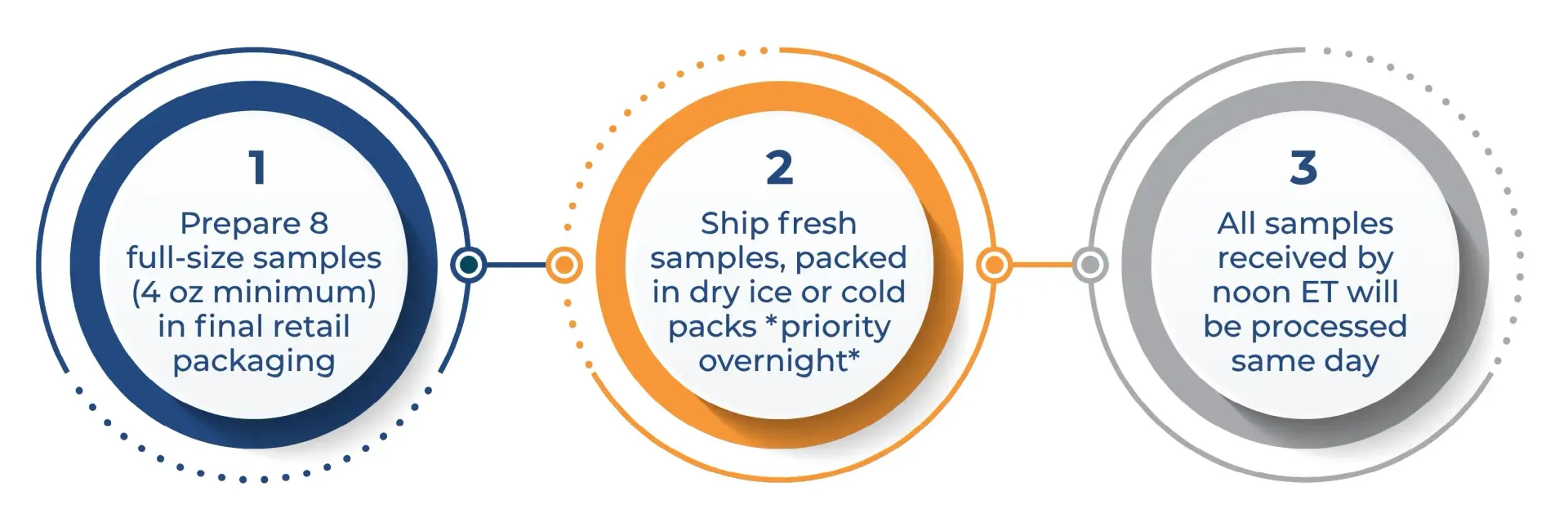
PROCESS FOR SENDING SAMPLES
Allergen testing analysis
WHAT IS ALLERGEN TESTING?
Allergen testing is the process of testing for the presence of specific allergen(s) in food and supplement products. This is important for compliant labeling, since any allergens present in a product must be declared. Allergen testing can also help identify cross-contamination and support verification of cGMPs (Current Good Manufacturing Practices).
WHAT TESTING METHODS DO WE USE?
ELISA is the predominant method used for allergen testing and works by detecting the presence of allergenic proteins in a sample. Since allergen proteins are what trigger allergic reactions, ELISA is a highly effective and direct testing method. ELISA allergen testing is used for the majority of allergens we test for, with the exception of walnut, which requires a PCR allergen test. PCR tests work by detecting allergen source DNA.
WHAT ARE THE REGULATORY REQUIREMENTS FOR ALLERGEN DECLARATION?
The regulatory requirements for food allergen testing and labeling are primarily governed by the Food Allergen Labeling and Consumer Protection Act (FALCPA), along with related food safety laws, which may vary by state.
Key requirements for manufacturers under FALCPA include:
- Identify and clearly label eight major food allergens: milk, eggs, fish, crustacean shellfish, tree nuts, peanuts, wheat, and soybeans on product packaging.
- List all allergens in the ingredient statement
- Include a “Contains” statement specifying any present allergens following the ingredient list.
- For tree nuts, the specific type of nut must be listed, for example, almonds
- For crustacean shellfish the species/type must be listed, for example, shrimp
- If there is a risk of cross-contamination, a “may contain” warning should be included.
While there are no specific federal mandates for allergen testing, the FDA encourages manufacturers to implement allergen control programs and follow Good Manufacturing Practices (GMPs) to prevent cross-contamination. Regular audits and testing should be conducted to ensure labeling accuracy and compliance. Additionally, manufacturers should be aware of any state-specific regulations, which can be found here, and maintain thorough documentation of testing results and allergen control measures to demonstrate compliance and traceability.
WHY IS AN ALLERGEN COMPLIANT LABEL IMPORTANT?
Creating a compliant allergen label is an essential step to protect both consumers and your business' liability.
Best practices include:
- Using standardized language in allergen statements to avoid confusion.
- Making allergen statements stand out with bold text and/or contrasting backgrounds
- Maintaining consistent terminology across all products
- Placing allergen statements in a dedicated section on the label for visibility
THE SCIENCE BEHIND FOOD ALLERGIES
Food allergens are proteins that the immune system mistakenly identifies as harmful. Most food allergies are IgE-mediated, meaning the body produces large amounts of antibodies that target and bind to specific food proteins. When these antibodies bind to an allergen, it causes an allergic reaction, ranging from mild symptoms to life-threatening anaphylactic shock. Non-IgE-mediated reactions, such as eczema, do not involve antibodies but include an immune response that is triggered by something in the food that an individual consumes. These reactions are delayed, and typically appear days after exposure to the allergen.
NOTE ABOUT COCONUT ALLERGEN REPORTING
Although the FDA no longer classifies coconut as a “tree nut” allergen under the Food Allergen Labeling and Consumer Protection Act (FALCPA), RL Labs continues to include coconut in both ingredient and allergen statements as a precautionary measure. This decision reflects our commitment to transparency and consumer safety, especially for individuals with sensitivities. We recognize that labeling standards may vary across companies and markets, but we’ve chosen to maintain coconut reporting for the time being—likely for several more years—until there is broader consensus across regulatory, retail, and manufacturing spaces.